HydraFacial vs. Glo2Facial: What’s the Difference?
Learn the differences between HydraFacial and Glo2Facial. Discover which treatment suits your skin best and get expert advice on your choice.

When people say they want glowing skin, they usually mean skin that looks smooth, fresh, and healthy. Not shiny from oil. Not covered in highlighter. Just naturally radiant.
Glow is often a sign of good hydration, even texture, and proper exfoliation. When your skin is clear and balanced, it reflects light better. That is what creates that soft, healthy luminosity. In this article, we will compare Microdermabrasion and HydraFacial differences, and which one is the best to choose for your glow goals.
Over time, dead skin cells build up on the surface. This can make your skin look dull, rough, or uneven. Even the best skincare products cannot work properly if they are sitting on top of that buildup.
Professional exfoliation treatments help remove those dead cells safely and effectively. The result is smoother skin, better product absorption, and a brighter appearance.
Two of the most popular treatments for this are Microdermabrasion and HydraFacial.
Microdermabrasion is a treatment that physically exfoliates the outer layer of skin. It focuses mainly on resurfacing and smoothing.
HydraFacial exfoliates too, but it also cleanses, extracts, and deeply hydrates at the same time. It combines exfoliation with serum infusion for a more complete treatment.
Both can improve your glow. The difference is how they get there.
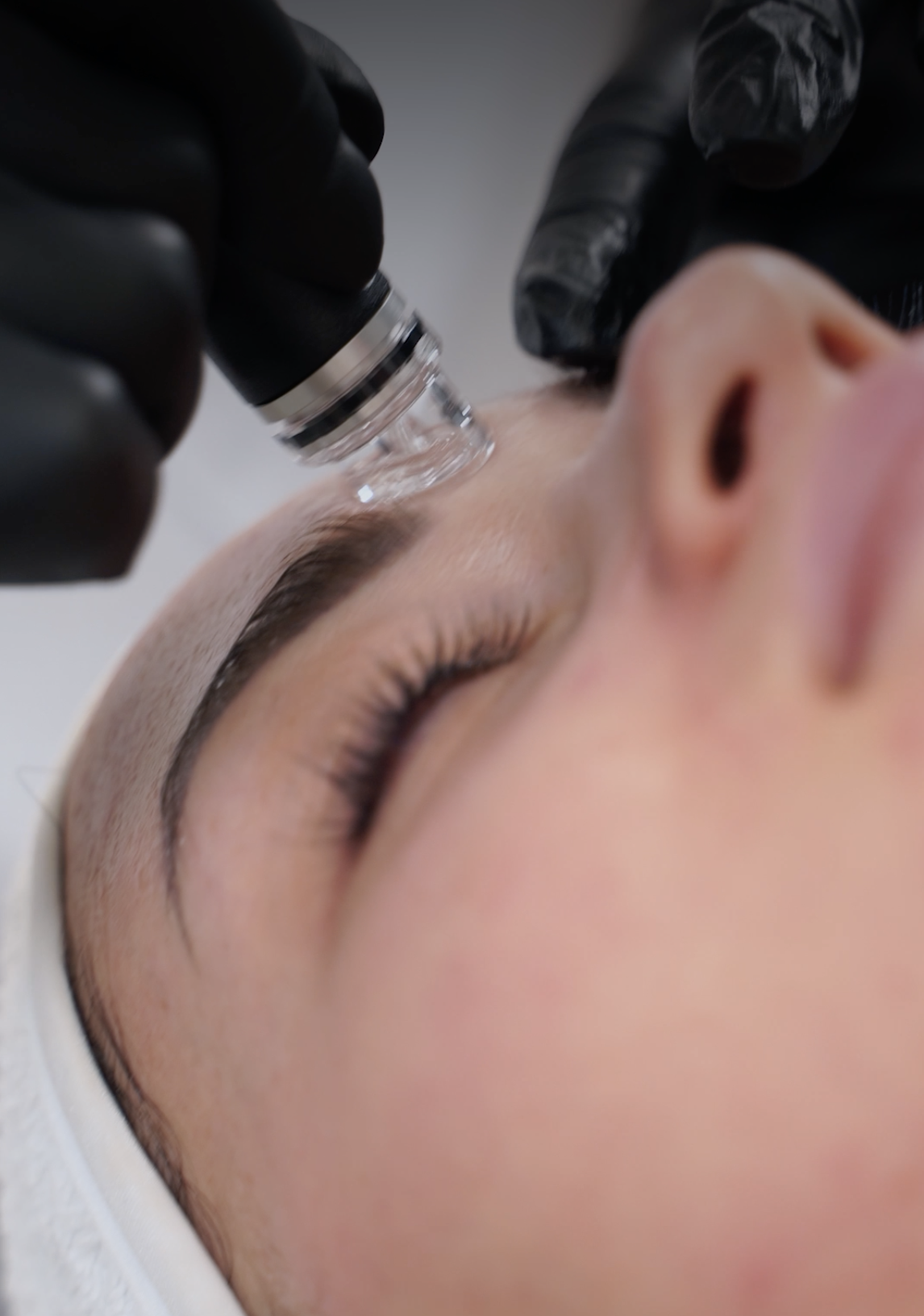
Microdermabrasion uses a device with either a diamond tip or fine crystals to gently buff away the top layer of dead skin. At the same time, a suction system removes the debris.
It feels like a light scratching or sanding sensation, paired with a vacuum, but it is controlled and precise.
By Removing the outer layer of dull skin, it reveals a smoother and brighter surface underneath.
Microdermabrasion works well for people who have:
It is usually better suited for thicker or more resilient skin types. If your skin is very sensitive, it may feel slightly too strong.
After one session, skin typically looks smoother and more even. Makeup often applies more beautifully.
You might experience mild redness right after the treatment, but it usually fades quickly. With regular sessions, texture continues to improve and skin can look more refined over time.
HydraFacial uses a special handpiece with a spiral tip that creates a gentle vortex effect. Instead of sanding the skin, it loosens and removes impurities while delivering hydrating solutions at the same time.
There is no harsh scraping. It feels more like a cooling, refreshing treatment.
This makes it a popular option for people who want effective results without discomfort.
A typical HydraFacial includes:
Each step builds on the last. Your skin is not only cleaned, it is also nourished and replenished.
Microdermabrasion is mechanical. It physically buffs away the surface layer.
HydraFacial is gentler. It combines mild chemical exfoliation with suction and hydration.
If you want stronger resurfacing, Microdermabrasion may feel more intensive. If you prefer a softer approach, HydraFacial is often more comfortable.
Comfort Level and Downtime
Microdermabrasion can cause slight redness and sensitivity right after treatment.
HydraFacial is generally very comfortable. Most people leave with calm, glowing skin and little to no downtime.
For sensitive skin or special events, comfort can be a big deciding factor.
Customization Options
Microdermabrasion mainly focuses on exfoliation.
HydraFacial can be customized with different boosters that target specific concerns like pigmentation, acne, or fine lines. This makes it more adaptable depending on what your skin needs that day.
Microdermabrasion gives you a clean, polished glow. It removes dullness quickly.
HydraFacial gives a hydrated, plump glow. The skin often looks softer and more luminous because it is infused with moisture.
Both create radiance, but the finish is slightly different.
Texture vs Plumpness
If your main concern is rough texture, Microdermabrasion may help smooth things out more noticeably.
If your skin feels dry or tight, HydraFacial often delivers a more visible transformation because hydration improves how light reflects off the skin.
Sometimes glow is less about exfoliation and more about moisture.
Choose Microdermabrasion if:
Choose HydraFacial if:
Final Thoughts: How to Choose the Right Treatment
Both Microdermabrasion and HydraFacial can give you brighter, smoother skin, but they work in different ways.
If you want stronger resurfacing and texture refinement, Microdermabrasion may be a good fit. If you prefer a gentler treatment that also deeply hydrates and gives an instant, dewy glow with little downtime, HydraFacial is often the better choice.
The best option depends on your skin type, your goals, and how you want your glow to look, polished or plump.
Learn the differences between HydraFacial and Glo2Facial. Discover which treatment suits your skin best and get expert advice on your choice.

Read about the hydraFacial cost, what is included in it, the benefits, how does it work, who is it for and much more.
Trustindex verifies that the original source of the review is Google. Oceren has truly transformed my skin. I was so insecure about my face and ashamed. Jaseyla and Faith are the best. The products are amazing and the staff are the sweetest and welcoming. The vibe is so calming/relaxing that I always wish my facial was longer. I will never go anywhere else.Posted onTrustindex verifies that the original source of the review is Google. Oceren is the best. Great experience every visit. Highly recommend Baylee for any service. She’s amazing!Posted onTrustindex verifies that the original source of the review is Google. I’ve been going here for almost a year now. After every visit my skin is SO amazing. Faith takes such good care of me and really pays attention to my progress and changes my skin undergoes. In fact, she is currently rescuing my skin after another service/product damaged it. Faith truly cares about my skin health and me! The facility is very welcoming, clean, and relaxing. They have their own parking lot with plenty of spaces. I highly recommend!!Posted onTrustindex verifies that the original source of the review is Google. Phenomenal service. Faith is fantasticPosted onTrustindex verifies that the original source of the review is Google. Faith has been a miracle worker for my acne issues and I haven’t felt such clear skin in years! I have been to a good number of med spas and estheticians in my lifetime and Faith truly stands out with her depth of knowledge and gentle hands. Not only that but she is always so warm and kind! The skincare regimen she’s put me on has given such positive results, as well as the tailored hydrafacials for my skin clarity.Posted onTrustindex verifies that the original source of the review is Google. If you are feeling unconfident in your skin, I HIGHLY recommend seeing Faith at Oceren. She has been so kind, supportive, and informative through my acne journey, and I seriously cannot recommend her service enough!!Posted onTrustindex verifies that the original source of the review is Google. Faith is great! She completely understands my daughter’s skin care needs and it shows! Would definitely recommend her to anyone with a teen who is struggling with acne.Posted onTrustindex verifies that the original source of the review is Google. I’ve been seeing Jaseyla for a couple of years now for my adult acne. My skin hasn’t looked this good in years! She is incredibly knowledgeable and takes the time to access what your skin needs and provides expert recommendations without any pressure. She’s truly amazing!Posted on